The following text is an excerpt from the author’s master’s thesis, submitted in partial fulfillment of the requirements for the Master of International Affairs at the Hertie School, Berlin.
Executive Summary
This research undertook the challenge of understanding how the leadership style of ECOWAS influences the results of its intervention; using the case study of Mali and Liberia. Drawing upon the existing debate on the role of the regional organization and how it transformed itself from an economic community to a security apparatus. The case of Liberia demonstrated the regional bloc’s capabilities to influence the outcome of conflicts in the region, the civil war enabled and reshaped the objectives of the organization to assume the role of a regional security actor in the region. The redirection of the organization pressurized member states to recognize the importance of maintaining stability in the region but also acknowledging peace and stability are the key to achieving regional development and continuity of the organization’s objectives.
Before the redirection of the organization, Nigeria long demonstrated regional hegemon and regional leadership capabilities. This is a result of Nigeria’s financial and military dominance in the region, thus its leadership was naturally adopted and accepted by the majority of the member states. Consequently, Nigeria’s influence in ECOWAS is very visible and well known, they are the highest budget contributor and have taken the responsibility of financing interventions of the organization. For instance, Nigeria financed the military operation undertaken by ECOMIL in Liberia and ensured ECOWAS made defying influence to resolve the conflict. ECOWAS changed its mandate to peace enforcement and uptaking a mediator/negotiating role to restore peace and order in Liberia. ECOMIL’s outstanding intervention and contribution in Liberia was a consequence of the US’s financial and logistic support. Undoubtedly, Nigeria continues to demonstrate its influence with counter-terrorism in Mali and the region. The regional hegemon undertook the responsibility to provide technical and financial support when ECOWAS deployed troops in Mali.
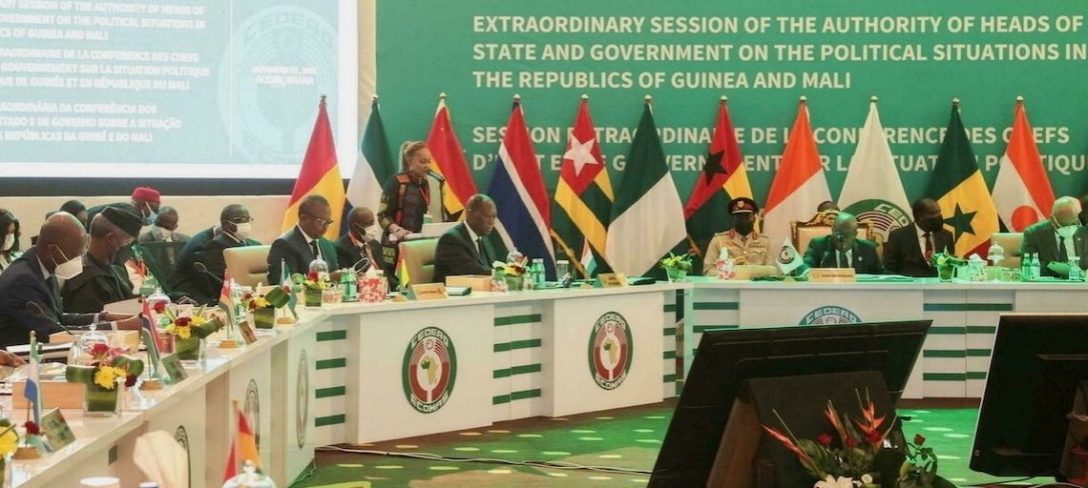
Through conducting research and interviews, the results suggests ECOWAS’s leadership style is heavily influenced by Nigeria. The organization’s involvement in member states affairs highly correlates with Nigeria’s interest to intervene or resolve threats in the region. The strongest finding indicated that Nigeria is the powerhouse of ECOWAS, meaning its foreign policy towards the Bloc dictates how the organization executes its objectives. For example, when the organization emphasizes a security approach, it meant that Nigeria had a security-driven leader. Moreover, Nigerian national interest plays a pivotal role in acquiring member states allegiance to its foreign policy. Such dominance contributed to the subtle division among the Anglophones and Francophone countries, as the Francophone countries deemed Nigeria’s dominance as a means of invading their sovereignty. Likewise, Nigeria is still the biggest funder of counter-terrorism in the region regardless of its domestic challenges. It has advocated and pushed for the implementation of a regional force. Equally important, the lack of effectiveness of strategy implementation in ECOWAS is because member states fail to enforce strategies adopted by the organization. Such indicated why the regional organization is faced with challenges to counter terrorism in Mali and the region. In the case of Mali, the organization has demonstrated influence in ensuring a consensual calendar is adopted to hand power back to the civilian government. Furthermore, they have contributed to coercive decision-making by imposing sanctions and suspension of Mali. Although Mali is suspended, its security and stability are of importance to the organization and are involved in the organization’s counter-terrorism initiatives.
The author’s acknowledgement of the continuation of the ongoing crisis in Mali and the region is subjected to chances of explanations regarding the leadership style of ECOWAS. The author believes more areas of the leadership style can be analyzed and applied to other member state countries.
 The Afropolitan