This following text is an opinion piece on the ongoing situation in Niger.
Niger is a key part of the Sahel region and is geographically the largest country in West Africa. Politically, the country has experienced relative democratic stability while its neighbors, Mali and Burkina Faso, have endured military coups and terrorism in recent years. Economically, the country is vastly enriched in Uranium, producing 7% of all global supplies yet 42.9% of its population live in poverty, earning less than $1.90 per day (Concern Worldwide, 2022).
On July 26th, 2023, a faction of the security forces known as the National Council for the Safeguarding of the Homeland (CNSP) in Niger launched a coup and detained President Mohamed Bazoum. The junta announced that it had seized power on a televised broadcast and installed General Abdourahamane Tchiani as the new Head of State. Very quickly key regional stakeholders such as ECOWAS, AU, and other international actors condemned the coup and called for the restoration of President Bazoum. ECOWAS upfront threatened military intervention in Niger and issued sanctions to pressure the junta to reinstate Bazoum by giving a one-week ultimatum. Such coercive decision-making from the regional bloc stirred strong opposition from francophonie member states, Burkina Faso, Guinea, and Mali declared their support for the Nigerien junta and expressed their refusal to apply any sanctions imposed on Niger. Furthermore, they threaten to use military action as retaliation against any military intervention. In response to the ultimatum, the Niger junta defied the ultimatum and refused to reinstate President Bazoum. However, General Abdourahamane Tchiani has agreed to dialogue with ECOWAS to explore diplomacy and a peaceful resolution to the situation.
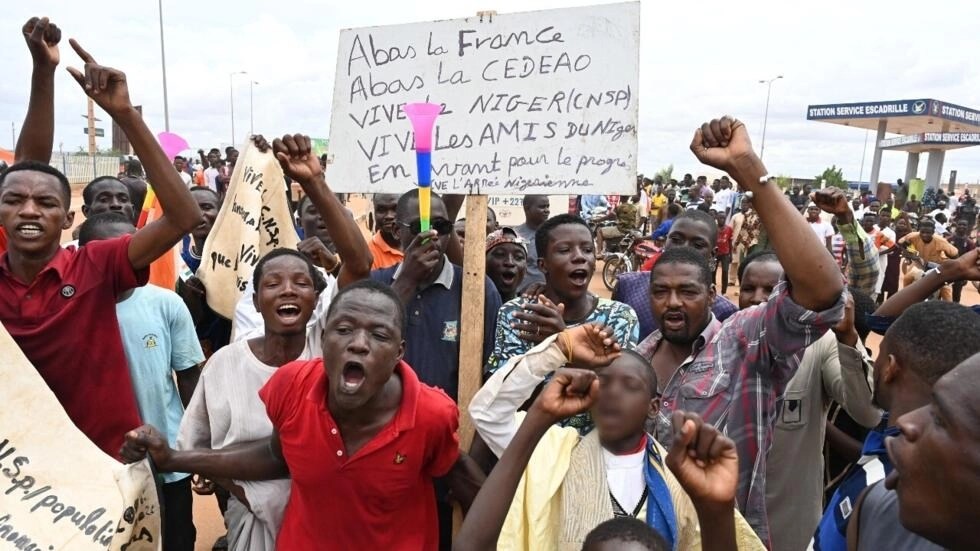
The support for the Nigerien junta from the junta-led states has created a deeper divide and a potential break-up of the West African bloc, thus questioning the credibility and leadership of the organization. The bloc’s quick decision to threaten military intervention very much showcased the organization’s stronger stance against Niger than it did with Mali and Burkina Faso. However, a military intervention from ECOWAS will destabilize Niger and inflict a regional conflict. The sanctions imposed will create a surge in militant activities, democratic backsliding, and restriction of civil liberties, and create severe socio-economic consequences. ECOWAS and AU must pursue soft power diplomacy with the military junta instead of using coercive actions. Both ECOWAS and AU must understand that threatening the junta only provokes them and does not provide solutions that benefit Niger or the interest of Niger. Furthermore, these institutions must realize and understand the growing anti-French sentiments, reasoning for the extraction of valuable resources while using repressive strategies to retain control in Niger and throughout other francophone countries.
The author’s acknowledgement of the continuation of the ongoing crisis in Niger is subjected to change of explanations and implications.
 The Afropolitan